Your 2BHK apartment is 850 square feet. Two bedrooms, compact living room, kitchen that seats two people max. You look at Instagram reels of sprawling 3BHKs and think, "Must be nice."
But here's what we've learned after designing 200+ compact apartments at Divya Jain Interiors: Small spaces can feel luxurious when designed right.
It's not about the square footage. It's about smart choices: where you put things, how furniture multitasks, what you see when you walk in.
Let me share 20 space-maximizing strategies that work specifically for Pune's typical 2BHK layouts.
The Mindset Shift: Think Vertical, Not Horizontal
Common mistake: Looking at floor space thinking, "Where do I put more furniture?"
Smart approach: Looking at wall space thinking, "How high can I build storage?"
In an 850 sq ft apartment with 9-foot ceilings, you have 7,650 cubic feet of space. Most people only use 60% of it, everything below 6 feet.
The goal: Use vertical space without making rooms feel cramped.
Strategy 1: Floor-to-Ceiling Wardrobes (The Non-Negotiable)
Standard wardrobe: 7 feet tall, wasted 2 feet above
Smart wardrobe: 9 feet tall (ceiling height)
What you gain:
● 30% more storage in same floor space
● Seasonal storage at top (rarely used items)
● No dust-collecting gap above
● Makes room look taller (vertical lines)
Real numbers:
● 7-foot wardrobe: 42 cu ft storage
● 9-foot wardrobe: 54 cu ft storage
● Gain: 12 cu ft = space for 40-50 garments
This vertical thinking is core to our space optimization approach.
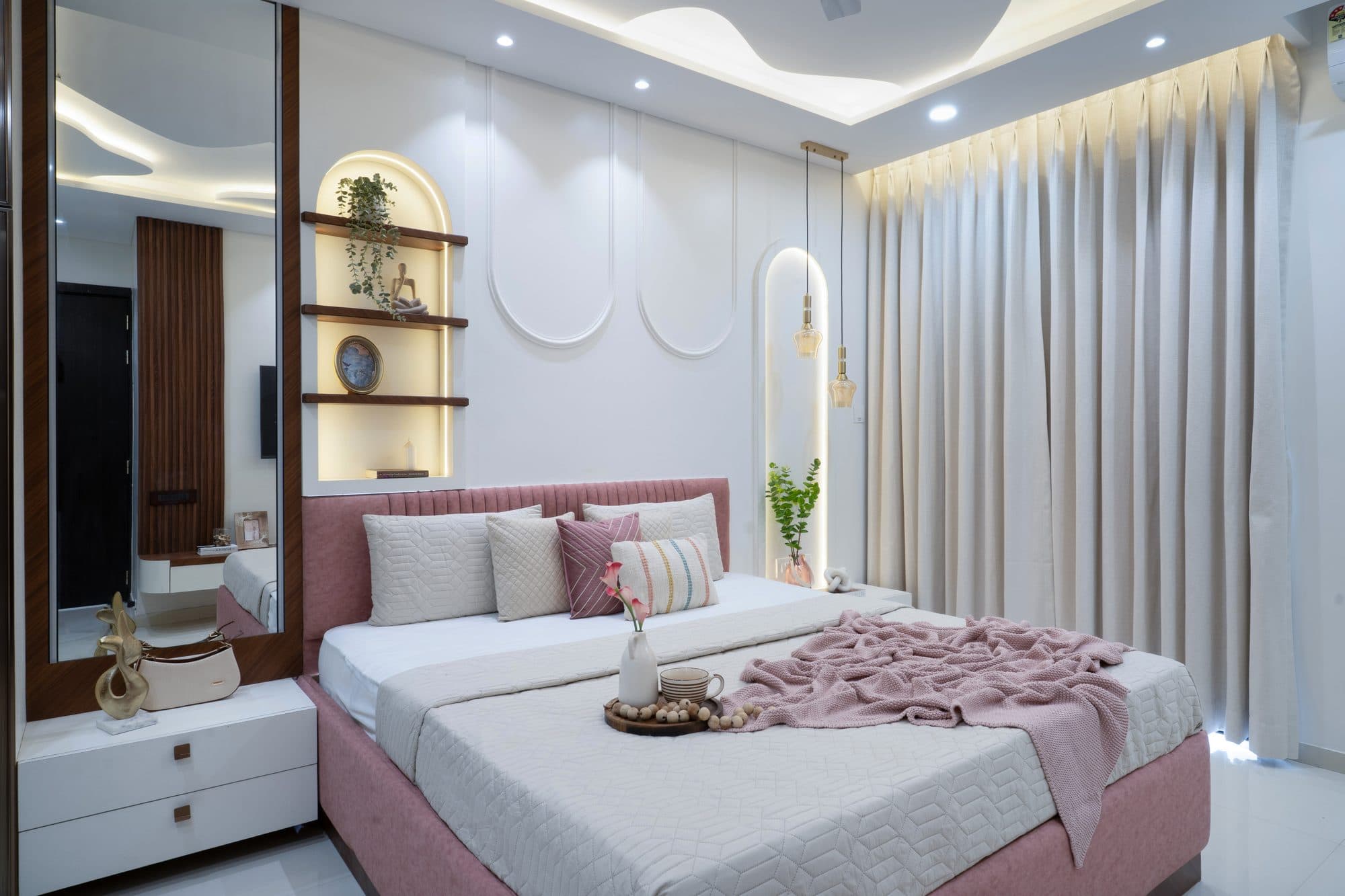
Strategy 2: Beds with Storage (Stop Wasting 15 Sq Ft)
Standard bed: Frame + mattress, nothing underneath
Smart bed: Hydraulic storage bed
What fits underneath:
● 200-liter storage capacity
● 6-8 quilts/comforters
● Off-season clothing
● Extra pillows and linens
● Guest mattress
Cost difference:
● Standard bed: ₹25,000
● Hydraulic storage bed: ₹45,000
● Premium: ₹20,000 for eliminating one cupboard
ROI: Saves 15-20 sq ft of floor space (that's ₹2-3L in Pune property value)
Strategy 3: Wall-Mounted Everything
What to wall-mount:
In bedrooms:
● Side tables (save floor space for cleaning)
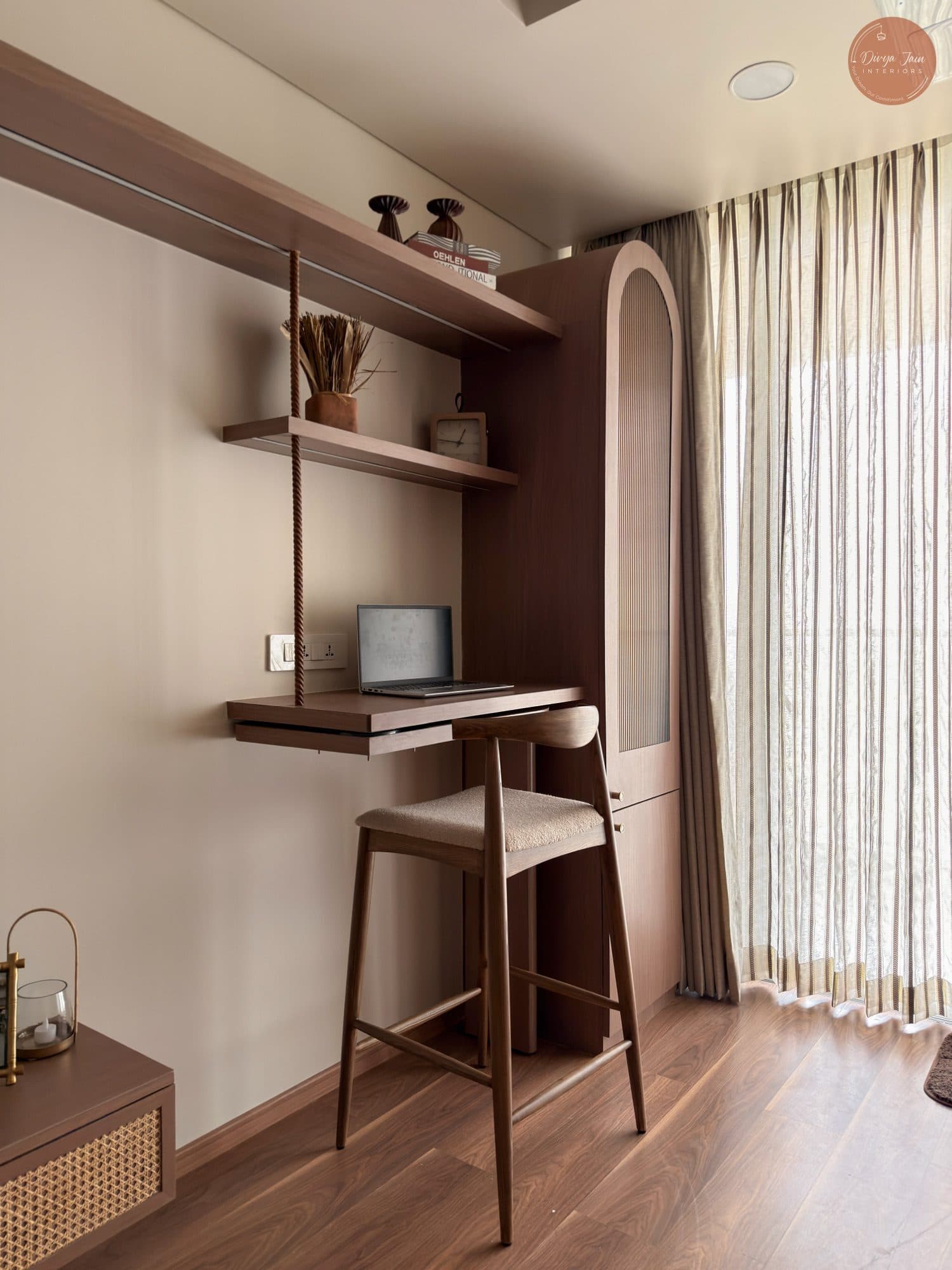
● Study table (folds up when not in use)
● TV unit (no bulky stand)
In living room:
● TV and entertainment unit
● Floating shelves instead of bookcases
● Console table (12-inch depth vs 18-inch)
What you gain:
● Floor space feels open
● Easier to clean (no furniture legs)
● Room looks bigger (you see floor)
● More flexible layout changes
Cost impact: ₹8,000-15,000 more than floor furniture Value: Room feels 20% larger
Strategy 4: Sliding Doors Instead of Swing Doors
Swing door: Needs 3×3 feet clearance (9 sq ft wasted)
Sliding door: Needs zero clearance
Where to use sliding doors:
● Bathroom (saves 9 sq ft in bedroom)
● Wardrobe (saves 12-15 sq ft in room)
● Between rooms (if privacy isn't critical)
Real example: 12×10 bedroom with swing wardrobe door = 108 sq ft usable Same room with sliding wardrobe = 120 sq ft usable Gain: 12 sq ft = space for study table
Strategy 5: Murphy Beds (The Guest Room Solution)
The problem: Guest bedroom used 20 days/year, wasted 365 days/year
The solution: Wall-mounted foldable bed
When folded up:
● Room becomes home office
● Yoga/workout space
● Children's play area
● Hobby room
When folded down:
● Comfortable queen-size bed
● Guest-ready in 30 seconds
Investment: ₹50,000-70,000 Return: Dual-purpose room = effectively doubles that room's value
Strategy 6: Loft Storage Above Wardrobes
That 2-foot space above wardrobes? It's worth ₹15,000-25,000 in storage.
What goes in lofts:
● Suitcases (used twice yearly)
● Festival decorations
● Old files and documents
● Rarely used kitchen appliances
Access:
● Hydraulic drop-down (premium, ₹12,000-18,000)
● Standard with ladder (economical, ₹8,000-12,000)
Pro tip: Use attractive baskets/boxes visible from below. Makes it look designed, not cluttered.
Strategy 7: Mirrors That Create Illusion
Strategic mirror placement:
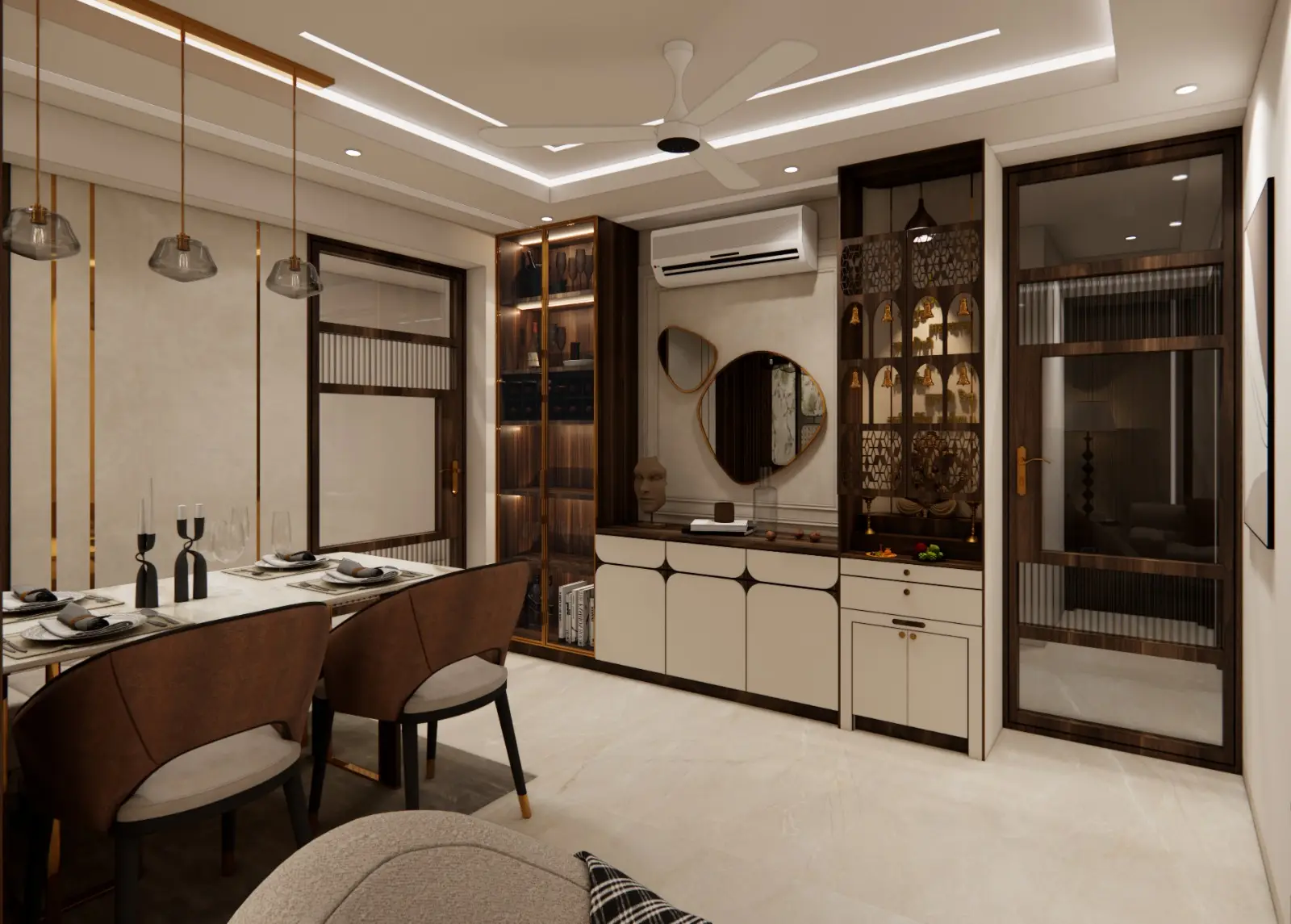
Behind dining table: Room appears twice as long
Wardrobe shutters: Bedroom feels 50% bigger + functional (dressing mirror)
Narrow corridor: Looks wider, brighter
Living room accent wall: Creates depth
The psychology:
● Reflects light (brighter = bigger feel)
● Creates depth perception
● Makes low ceilings feel higher
Cost: ₹300-800/sq ft for quality mirrors Impact: Rooms feel 30-40% more spacious
Strategy 8: Light Colors = Visual Space
Dark walls in small space: Closes in, feels cave-like
Light walls: Opens up, feels airy
Strategic approach:
● Main walls: White, off-white, light grey
● Accent wall: One wall in deeper color (not all four)
● Furniture: Light wood tones, not dark walnut
Exception: Dark accent behind TV (doesn't shrink space, adds drama)
This color psychology is part of our residential interior design approach.
Strategy 9: Furniture That Multitasks
Instead of separate pieces, use:
Ottoman with storage: Seating + storage + coffee table
Dining table with leaf: 4-seater daily, 6-seater when guests come
Sofa-cum-bed: Living room couch + guest bed
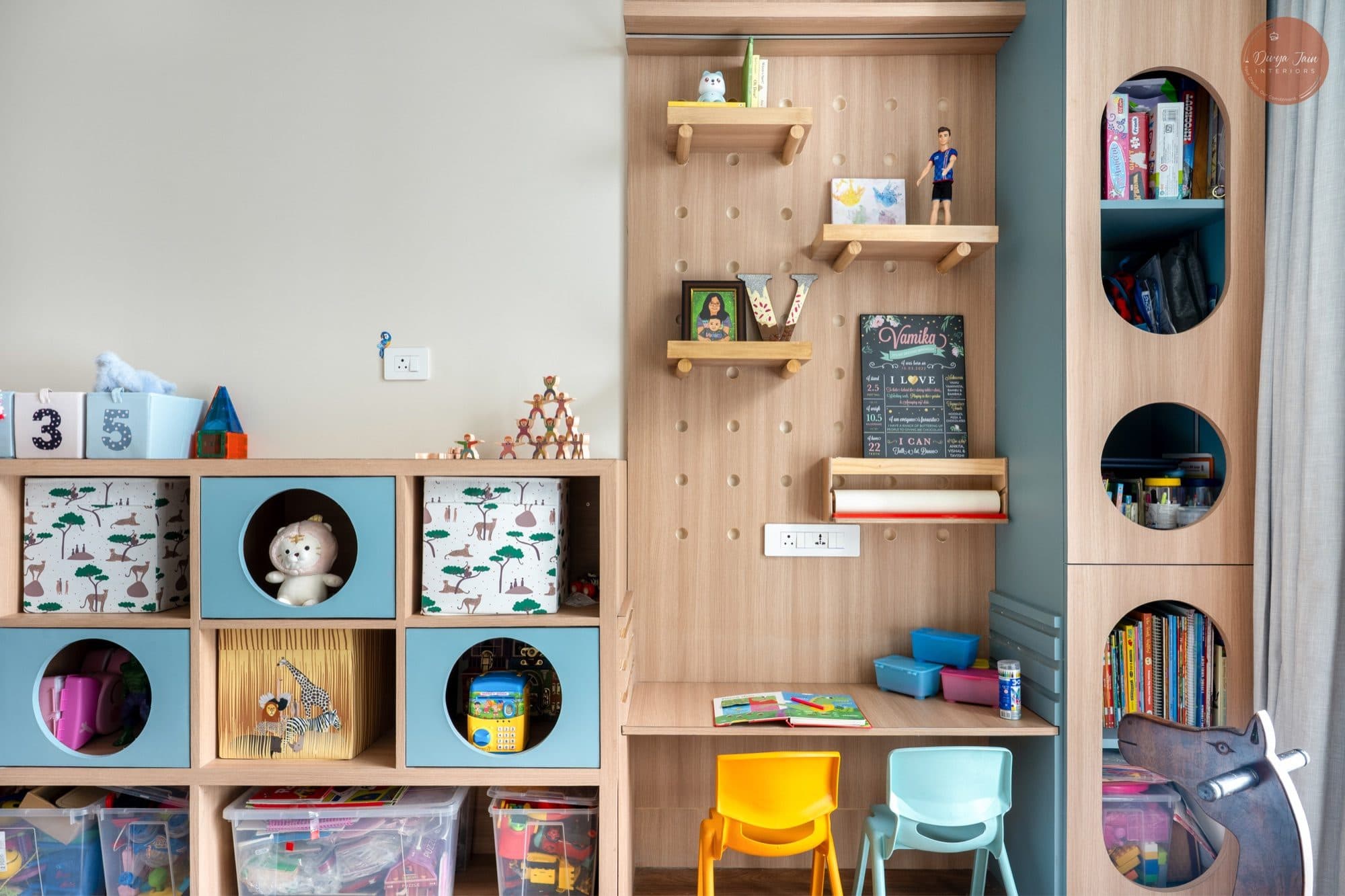
Study table with shelves: Work surface + book storage
Kitchen island on wheels: Prep space + dining + storage + movable
The rule: Every furniture piece should serve 2+ functions
Strategy 10: Smart Kitchen Storage
Wasted spaces in typical kitchens:
● Corner cabinets (50% unused)
● Space above refrigerator
● Under-sink area
● Toe-kick space below cabinets
Smart solutions:
● Corner pull-outs: Le Mans or magic corner (₹8,000-15,000)
● Overhead cabinets above fridge: Extra 15 cu ft storage
● Under-sink organizers: Maximize awkward space
● Toe-kick drawers: Flat items (baking trays, cutting boards)
Pro tip: Tandem drawers vs shelves in base cabinets
● Shelves: 60% accessible
● Pull-out drawers: 100% accessible
● Worth the ₹30,000-50,000 premium
See detailed kitchen optimization in our modular kitchen guide.
Strategy 11: Transparent Furniture
Why glass/acrylic furniture works:
● Physically exists but visually disappears
● Light passes through (brighter room)
● Doesn't block sight lines
Where to use:
● Glass dining table (vs solid wood)
● Acrylic coffee table
● Glass side tables
● Transparent chairs (only 2, not all)
Cost: 20-40% premium over wood Impact: Room feels less crowded
Strategy 12: Recessed Storage
Create storage IN walls, not ON walls:
Bathroom niches: Toiletries storage (saves 2 sq ft counter space)
Bedroom alcoves: Display + storage for books/decor
Kitchen backsplash: Spice racks built into wall
Staircase (if duplex): Drawers under each step
What you gain:
● Storage without floor space loss
● Clean, built-in look
● 3-4 inches depth adds up
Strategy 13: Pocket Doors (The Hidden Space-Saver)
Pocket door: Slides into wall cavity (no swing space needed)
Where it works:
● Bathroom (saves 9 sq ft)
● Kitchen entry (if you close kitchen)
● Walk-in wardrobe entry
Cost: ₹15,000-25,000 per door (installed)
Worth it when:
● Every square foot counts
● Room is narrow
● Furniture placement blocked by door swing
Strategy 14: Built-In vs Freestanding
Freestanding furniture: Gaps around it (wasted space + dust collectors)
Built-in furniture: Wall-to-wall, floor-to-ceiling (no wasted space)
Examples:
● Built-in study desk (uses exact wall width)
● Built-in TV unit (perfect fit, no gaps)
● Built-in wardrobes (wall-to-wall coverage)
Trade-off:
● Can't take with you when moving
● But: Maximizes every inch while you're there
Strategy 15: Folding/Retractable Elements
What folds away:
● Dining table (wall-mounted, drops down)
● Ironing board (pulls out from cabinet)
● Study table (folds flat against wall)
● Drying rack (retractable from balcony ceiling)
When it works:
● Multi-purpose rooms
● Items used 1-2 hours daily
● Compact kitchens
Cost: ₹5,000-15,000 per element Gain: Room serves multiple functions
Strategy 16: Slim-Profile Furniture
Standard sofa: 36-inch depth
Apartment-scale sofa: 30-inch depth
What you save: 6 inches × length = significant floor space
Where slim matters:
● Dining chairs (18-inch vs 22-inch)
● Wardrobes (22-inch vs 24-inch depth)
● Side tables (12-inch vs 18-inch)
● Console tables (10-inch vs 15-inch)
Rule: Shave 2-4 inches everywhere = gain 20-30 sq ft room space
Strategy 17: One Large Rug (Not Multiple Small)
Small rugs: Visually chop up floor, make room look smaller
One large rug: Unifies space, makes room look bigger
Sizing:
● Living room: 6×9 feet minimum (not 4×6)
● Bedroom: Extends 2 feet beyond bed on sides
Why it works:
● Eye sees continuous floor space
● Defines zones without dividing
Strategy 18: Fewer, Larger Decor Pieces
Cluttered look: 20 small frames, 15 small plants, many small objects
Spacious look: 3 large frames, 2 statement plants, few quality pieces
Psychology:
● Fewer items = calmer space
● Large scale = bolder, more spacious feel
● Quality over quantity
Strategy 19: Transparent/No Window Treatments
Heavy curtains: Make windows look smaller, block light
Smart alternatives:
● Sheer curtains (privacy + light)
● Top-down bottom-up blinds (privacy without darkness)
● Frosted film (bathroom windows)
● Nothing (if privacy not an issue)
What you gain:
● Maximum natural light (brighter = bigger feel)
● Unobstructed views
● Less visual weight
Strategy 20: Consistent Flooring Throughout
Mistake: Different flooring in each room
Smart choice: Same flooring everywhere (or maximum 2 types)
Why:
● Eye travels uninterrupted
● Fewer visual breaks = larger feel
● Easier maintenance
Exception: Different in bathrooms (functional necessity)
Room-by-Room Application: 2BHK Layout
Living Room (120-150 sq ft)
✅ Wall-mounted TV unit (save 12 sq ft)
✅ Sofa-cum-bed (guest accommodation)
✅ Ottoman with storage (coffee table + storage)
✅ Large mirror on one wall (double visual space)
✅ Floating shelves (not bookcase)
Result: Functional living space that accommodates 6-8 people
Master Bedroom (110-130 sq ft)
✅ Floor-to-ceiling wardrobe (maximize storage)
✅ Hydraulic storage bed (eliminate extra cupboard)
✅ Wall-mounted side tables (floor space clear)
✅ Loft above wardrobe (seasonal storage)
✅ Sliding wardrobe door (save door swing space)
Result: Spacious bedroom with storage for 2 people's complete wardrobe
Second Bedroom (100-120 sq ft)
✅ Murphy bed (room becomes office/hobby space)
✅ Wall-to-wall wardrobe (one wall)
✅ Wall-mounted desk (folds if Murphy bed down)
✅ Vertical storage (up to ceiling)
Result: Guest bedroom 20 days/year, functional space 365 days/year
Kitchen (60-80 sq ft)
✅ Full-height cabinets (up to ceiling)
✅ Tandem drawers (access everything)
✅ Corner solutions (no wasted space)
✅ Overhead storage above fridge
✅ Under-sink organizers
Result: Storage for family of 4, efficient workflow
See comprehensive kitchen design in our kitchen cost guide.
Investment Required
To maximize a 2BHK (850 sq ft):
Budget approach (₹8-11L):
● Smart layout, standard materials
● Hydraulic bed in master bedroom
● Wall-mounted furniture where critical
● Floor-to-ceiling wardrobes
● Basic space optimization
Standard approach (₹11-15L):
● Everything in budget PLUS:
● Murphy bed in second bedroom
● Premium hardware (smoother operation)
● Better quality materials
● Loft storage with hydraulic access
● More built-in solutions
Premium approach (₹15-20L):
● Everything in standard PLUS:
● Motorized Murphy bed
● Custom-built-in everywhere
● Premium finishes
● Smart home integration
● Pocket doors, recessed storage
Understanding these options is part of our approach to 2BHK interiors.
Common Mistakes to Avoid
❌ Too much furniture: Less is more in small spaces
❌ Dark colors everywhere: Makes space feel 30% smaller
❌ Standard-height wardrobes: Wasting precious vertical space
❌ Freestanding furniture: Gaps around = wasted space
❌ No multitasking furniture: Every piece should serve 2+ functions
❌ Blocking natural light: Heavy curtains, furniture blocking windows
❌ Clutter on display: Open shelves need discipline or look messy
Real Project: 2BHK in Hinjewadi
Challenge:
● 780 sq ft apartment
● Young couple + toddler
● Work from home requirement
● Need guest accommodation
● Budget: ₹11.5L
Solutions implemented:
● Murphy bed in second bedroom (becomes office daily)
● Hydraulic storage beds in both bedrooms
● Floor-to-ceiling wardrobes (gained 40% storage)
● Kitchen with full tandem system
● Living room sofa-cum-bed (guest stay)
● Wall-mounted TV and study desks
Results:
● Home office (daily)
● Guest bedroom (when needed)
● Toddler play space (folded Murphy bed)
● Storage for family of 3
● Accommodates 2 overnight guests
Client feedback: "Doesn't feel like 780 sq ft. Guests are shocked when we tell them the size."
Ready to Maximize Your Small Space?
Small doesn't mean compromised. With smart design, your 2BHK can feel spacious, organized, and beautiful.
Let's discuss how to make every square foot work harder in your apartment.
Schedule Your Free Consultation:
📞 Call: +91-8390707573 / +91-8959070757
💬 WhatsApp: Click to message
🌐 Visit: www.divyajaininteriors.com
During consultation:
● We'll understand your specific layout challenges
● Measure or review your floor plan
● Identify wasted spaces you didn't know existed
● Provide 2-3 layout options optimizing your space
● Show similar small-space projects we've completed
No pressure, just smart solutions for your compact home.
Related Reading
🔗 Our Space Optimization Services - See our specialized approach
🔗 2BHK Interior Design Cost Guide - Budget planning for compact homes
Living in a small Pune apartment? Share your biggest space challenge in the comments or WhatsApp us. We respond within 2 hours during business hours.